Thursday, March 27, 2025

Alexander 2004

 Alexander 2004 Movie

Alexander Special Edition CD (2)

"Conquer your fear, and I promise you, you will conquer death" (1).

Summary:

The movie Alexander is directed and cowritten by Oliver Stone, starring Colin Farrell as Alexander, Angelina Jolie as Olympias, and Anthony Hopkins as Old Ptolemy (4). The film shows Alexander the Great's rise to power from his childhood to one of the most renowned military leaders to date. It showcases some of his relationships with his family and companions during this time. We get to see how Alexander has to grasp all of the expectations that get placed upon him, until it inevitably leads to his downfall.
 
  
Alexander and his parents (8) 
The movie depicts Alexander and Hephaestion as 
  romantic interests, even though Aristotle warns that "when 
  men lie together in lust, it is a surrender to the passions 
  and does nothing for the excellence in us" (1). I took this as 
  meaning he does not believe that a gay relationship is 
  natural for a man since they will physically gain nothing in 
  the end. Unlike when in a straight relationship, he can gain 
  a child to carry on his name and fortunes. A turning point in 
  the movie is when it is revealed that Alexander's father, 
  Philip II, has a child with Eurydice baring who is pure 
  Macedonian, unlike Alexander who is only half 
  Macedonian. This lost Alexander's right to the throne until 
  Philip was assassinated and Alexander was able to be 
  crowned king by his supporters. Once this occurred, he 
  killed Eurydice and her son and decided he wanted to fight 
  against the Persian Empire to make his own legacy (1). 
  Once he started winning these major battles, he gained his 
                                                        reputation as a strong leader.

Alexander leading his army (7).
Alexander had been moving all around Asia, trying to conquer as many places as possible, when he met Roxana and married her. Roxana had no status of her own, but by marrying her it helped to control his new territories even more. This led to some jealousy between Hephaestion, who was now also one of Alexander's generals, and Roxana (5). During this time, he had gotten so bloodthirsty that he had killed, and gotten killed, so many people. Alexander was constantly bringing his army into cities and destroying them to the point where his own generals started questioning all of his choices. He even had one of his trusted and loyal generals, Parmenion, executed because his son had been conspiring against Alexander (1).

  
Alexander and Hephaestion (6)
At the end of the movie, Hephaestion got sick 
  due to an unknown illness, likely typhus, and 
  passed away. Earlier in the movie, Alexander 
  and Hephaestion made a vow that if 
  Hephaestion was to die first, Alexander shall 
  follow him in death just like Achilles had done 
  for Patroclus (1). After Hephaestion had died, 
  Alexander was shown dying only a couple of 
  months later. It was revealed in the end 
  by Ptolemy, the narrator and Alexander's first in 
  command, that he actually poisoned Alexander 
                                         so they wouldn't have to go to fight and conquer any more places (5).

Mythological Representation:

I feel as though the movie does a mostly accurate representation of the story of Alexander. Oliver Stone had made some clear reinterpreting based on what he must have believed to enhance the story more. To make the story easier for the audience to understand, there was more modern language and slang. However, the biggest difference that stuck out from what I had known was putting Alexander and Hephaestion in a relationship. Historically, the two were known to be extremely close, but there had been no evidence of any romantic relationship. Different sources and authors claim different things about their relationship, but I did enjoy that Stone chose to write them as being in a romantic one. I feel like it added an element to the story I was not expecting and definitely adapted it to more contemporary attitudes. Society now is much more accepting of being with whoever you would like to be with regardless of gender, and the need to produce a child also isn't as imposed onto people today.

Lighthouse of Alexandria shown in film (1)
The storyline of the film can get a bit confusing as it did jump around a bit. In one of the beginning scenes of the movies, the lighthouse of Alexandria is shown, however, this was not built until after Alexander's death (3).  In doing so, I don't believe they got all of Alexander's storyline. I felt like the film lacked a bit of what truly made Alexander "the Great" by not adding in more of how he figured out some military strategies and his relationships with other political leaders. It is a movie though, so I understand they just couldn't fit everything in since there was so much that could be said about his life. An example of them pushing storylines together is that in the film Alexander had an arrow through the lung in the battle of Hydaspes, when that really happened when he stormed the Malians (9).

The film showed a particularly good theme of ambition with how Alexander constantly wanted to keep on going and conquering more land. I liked how it showed that too much ambition can be dangerous because he wanted it so badly that he made some significant sacrifices. He kept going until he went too far and lost it all by having his troops and people all start turning against him and questioning him. It showed the importance of letting people keep your ambition in check in order to protect yourself.


Alexander talking to his troops (10).

Overall, I found the film Alexander to be mostly accurate to what I had already known and read about Alexander the Great. I feel like it gives an overview to his story with only a couple pieces of inconsistent data with other films and novels that I had noticed. I think the film made Alexander be a bit more emotional and weaker than I had otherwise pictured him to be, but that made him more human and a bit easier to sympathize with. This is getting readapted again into another movie of Alexander which is coming out this year, you can find the trailer here


Work Cited

  1. Alexander. Directed by Oliver Stone, performances Colin Farrell and Angelina Jolie, Intermedia, 2004.
  2. “Alexander.” The Movie Database, www.themoviedb.org/movie/1966-alexander/images/posters
  3. The Editors of Encyclopaedia Britannica. "lighthouse of Alexandria". Encyclopedia Britannica, 14 Feb. 2025, https://www.britannica.com/topic/lighthouse-of-Alexandria.
  4. “Alexander (2004) - Full Cast and Crew - IMDb.” IMDb, www.imdb.com/title/tt0346491/fullcredits.
  5. “Alexander (2004) - Plot - IMDb.” IMDb, www.imdb.com/title/tt0346491/plotsummary.
  6. Garvey, Patrick. “Were Alexander the Great and Hephaestion Lovers? — Ancient Heroes.” Ancient Heroes, 12 Jan. 2024, ancientheroes.net/blog/alexander-hephaestion-lovers.
  7. “Alexander - Publicity Still of Colin Farrell.” MovieStillsDB.com, 2004, www.moviestillsdb.com/movies/alexander-i346491/96f94b.
  8. “Alexander (2004).” IMDb, www.imdb.com/title/tt0346491/mediaviewer/rm336629504.
  9. Mann, M. J. “Alexander’s Injuries Part 2.” The Second Achilles, 2 Nov. 2013, www.thesecondachilles.com/2013/11/01/alexanders-injuries-part-2.
  10. “Alexander (2004) | MUBI.” MUBI, mubi.com/en/us/films/alexander.

The Legend of Hercules (2014)


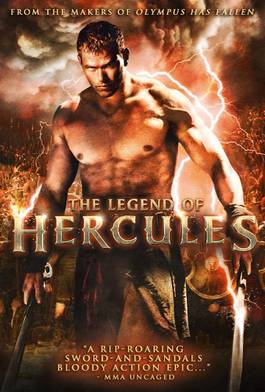
The Legend of Hercules 2014 Renny Harlin (1)

  Like many adaptations of Greek mythology in modern media, The Legends of Hercules, has loose similarities to the actual myth. The film uses a few similar core characters, changes the use of certain elements of the 12 labors, as well as changes fundamental aspects of Hercules's Greek mythology to appeal to contemporary values and morals. (4)

See here for a better understanding of Hercules's original Greek Mythology: Link (7).


Youthful Hercules, 69-96 CE, The Metropolitan Museum, New York, NY, USA (3)

Representation 

Similar to the Greek myth of Hercules, in the film Hercules is the son of Zeus and Alcmene, with his mortal ‘father’ being Amphitryon. But this is largely where the similarities stop. In, The Legends of Hercules, Hebe is depicted as Hercules' solo love interest; and while some myths back this up, it is only after Hercules has been granted immortality that he pursues Hebe as a lover.(5) In the movie, Hercules is also depicted as having a brother who tries to overtake his role in the family throne rather than a cousin. This is how his story is depicted in original materials. (4,7)

Unlike the well-known myths of Hercules, Hera is not at all mentioned, so Hercules isn’t granted his infamous 12 labors.(7) However, some elements of the original tasks are still depicted within the movie in different manners. The film focuses on Hercules being captured in battle and fighting to get free, to make it back to his lover, Hebe before she can be married off to his brother.(4) The movie morphs some of the 12 labors into other action sequences revolving around Hercules and his attempt to survive and escape his capture and return to agores.(4) One element of the labors is used to depict Hercules’ strength at the very beginning of the film; Hercules defeats a lion that attacks him and his brother(4) (Slaying of the Nemean Lion)(6). After Hercules kills the lion, his brother takes it's skin and claims that he is the one who defeated the lion, and gloats with it in front of their family and peers, Hercules doesn't try and correct his brother's version of the event.(4)


Hebe, The Legends of Hercules (2)

Contemporary Perspectives

    In the film The Legends of Hercules, the presence of women within the story are independent from the men around them. Instead of being like Hera and plotting strategic ways to get revenge against her husband, Alcmene focuses on doing what she wishes - providing love and protection for her child, Hercules.(4) Her desire is to be a loving mother, not necessarily a wife to be kept. Hercules’ love interest in the movie, Hebe, takes a similar feminist stance. Hebe uses her voice to speak for herself and her wishes. While she may not be able to change her outcome, she still stands her ground against the male characters in the film. She made plans with her true love, Hercules to elope and run away with him, while traditionally, women in these stories are betrothed against their will to gods or other men in power.(4) The film characterizes Hebe and Alcmene as independent from their husbands and their fates, giving them each a voice and allowing them to share their desires with the other characters.    

  In Greek mythology, women are secondary characters to their sons and husbands, or they fill in roles of lovers, mothers, Goddesses, caretakers, etc. They do not have a sense of self-use, the reader frequently sees them treated as property rather than people. In the film, Hercules' mother Alcmene hid her secret of Hercules being Zeus’ son to protect Hercules from her husband.(4) Alcmene made her own decisions, she prayed to Zeus and Athena, without needing to obtain her husband's permission, and purposefully hiding it from him.(4) She lived a life outside of her husband, though it's not fully depicted in the movie, it is known through her actions. This differs greatly from original Greek mythology. Though there are women who live without their husbands for a time within some myths, like Penelope living by herself while Odysseus is gone, the woman’s actions are exclusively derived from a need to appease their husband when they return. Hera, who lived a very separate life from Zeus, is predominantly featured in stories where her actions are in spite of her husband. These are examples that show, that typically in Greek stories, the woman’s life focuses on a man, even in their (the women) independence.    


Hercules, The Legends of Hercules (2)

What does the adaptation add to representation?

    I think overall The Legends of Hercules, puts emphasis on Hercules's humanity. In many adaptations of Hercules's myth, the focus is put on him discovering his divine relations, developing into his divine power, or pursuing a lover. While Hercules's relationship with Hebe is a large part of the plot, their desire to elope, Hebe being a huge motivator for his escape from capture, and her part in Hercules's motives to retaliate against his father and brother.(4) The viewer also gets to see his inner turmoil. 
    Hercules isn't portrayed as some flawless hero, in fact, his flaws and struggles are highlighted throughout the duration of the movie, and allow the viewer to better connect with him as a character. Hercules has a lot of self-doubt in this film, more than I've seen portrayed in any other adaptation of his myth. Beyond this, rather than taking his divinity in stride like in many of the other adaptations of his myth, here we see Hercules long for a normal life, not just as a non-hero, but also away from the royal lifestyle his lineage is tied to. 
    The Legends of Hercules, gave Hercules complex emotions, a desire for familial independence, a life lived without having to fulfill a divine duty, and personal growth and freedom throughout his journey. These are all aspects that aren't heavily depicted in other adaptations. 


Work Cited

  1. Schaefer, Sandy. “The Legend of Hercules.” ScreenRant, 10 Jan. 2014, https://screenrant.com/db/movie/the-legend-of-hercules/. Accessed 27 Mar. 2025.

  2. “The Legend of Hercules (2014).” IMDb, 2025, https://www.imdb.com/title/tt1043726/mediaviewer/rm2305871872/. Accessed 27 Mar. 2025.
  3. Patel, Ameera. “How to Show up in a Gym – 3 Ancient Sculptures of Hercules.” DailyArt Magazine, 20 Aug. 2022, https://www.dailyartmagazine.com/sculptures-of-hercules/.

  4. The Legend of Hercules. Directed by Renny Harlin, performances by Kellan Lutz, Gaia Weiss, and Scott Adkins, Summit Entertainment, 2014.

  5. “Greek Mythological Story of Hebe and Hercules.” https://www.greekboston.com, 5 Jan. 2017, www.greekboston.com/culture/mythology/hebe-hercules/. 

  6. Madeleine. “What Were the 12 Labors of Hercules? -.” Theoi.com, 13 Sept. 2019, https://www.theoi.com/articles/what-were-the-12-labors-of-hercules/.

  7. History.com Editors. “Hercules: Myth, Legend, Death & 12 Labors | HISTORY.” HISTORY, 7 Feb. 2011, https://www.history.com/articles/hercules.


Olimpos - Aki

 "And then in the end, you're going to find me and say, 'forgive me, my God...'

-Apollo (Olimpos)(3)

Panel of Apollo from Olimpos (3)

________________________________________________________
Summary

)
)
The story of 'Olimpos' by Mangaka Aki follows a rather unique spin on the characterization of Apollo, but very notably, Ganymede. The story takes place in what is called 'Apollo's garden' (at least, according to Apollo, it is). It tells the tale of Ganymede's time there, capturing visits from Apollo, and bringing in other gods into the mix as well. Most prevelent being Zeus and Hades, with Poseidon making brief appearances early in the manga(3). 
------------------------------------------------------------

"...I'm sorry for ever doubting you..."
-Apollo (Olimpos)(3)

----------------------------------------------------------------------

Characterization of Ganymede

In classic Greek stories, Ganymede is not discussed much in terms of personality, but more so the focus is on his appearance. Throughout research, he is described as "'...godlike Ganymedes that was born fairest amongst men.' Homor Illiad 20.199" (1). However, his family remains disputed amongst sources, some stories telling that he is nothing more than a farmer's son, others claiming him of royal blood (1). 
    Within the story of Olimpos, while his backstory is delved into, his personality is what is most attention grabbing. This is not just because he is introduced first, but it is because his story is not yet shown, the reason he is in this beautiful garden is not yet revealed to the reader. This is also where his story seemed to have taken a turn from a version I heard a while ago. For this blog I will be using the version I heard first for the sake of simplicity. 


Ganymede's Origins (according to some)

Ganymede began as the Prince of Troy, son of Tros. He was beautiful, renown far and wide for his features. Poets and artists alike portrayed him as a practically perfect human, even amongst his two other brothers, he was known for his beauty. In short, even amongst the men and women of the world, Ganymede was seen as the most beautiful. And as known throughout Greek mythology, when Zeus
finds something pretty, he wants it (2).

The tales vary as to why he was on those hilltops, some say he was tending sheep, others say that he may have been hunting. In either version, Zeus, in the form of an eagle and scooped Ganymede up, carrying him off to Olympus. On Olympus, Ganymede was made into the cup bearer of the gods and turned immortal by Zeus himself (2).

In some tales of the story, Ganymede was brought up and replaced the goddess Hebe. The story of Ganymede has taken many versions, whether it be presenting the boy of serving wine and nectar to the gods. Or it is showing him as a playmate to younger gods, for example from the website, Eros. But a famous version is how Ganymede ended up in the sky as a constellation, as the synbol for Aquarius as well. The story goes that Hera, as she usually is with Zeus' lovers, was jealous of the prince, and she turned that directly to him. To keep the boy safe and to honor him, Zeus sent him to the stars, turning him into a constellation(2).

Where the Story Splits

The story "Olimpos" proposes is a mildly different one. Instead of the famous disguise of Zeus, it was not Zeus at all that took Ganymede away. Rather it was the god Apollo that decided to come to earth to take the boy away. In the scene, Ganymede was out with a brother who was retrieving Ganymede for his coming of age ceromony. While speaking, the brothers discussed their skills and such, coming to the topic of Ganymede's beautiy. His brother gave him a blade, telling him that he best protect himself from the gods, revealing their parents believe that it would not be long until the gods came to try and take Ganymede away. It is in this moment that Apollo comes down and takes Ganymede away after a brief moment's resistence, resutling in, what was hinted at, his brother's death (3).

I would like to bring attention to the ceromony for a moment. "Coming of age" suggests he is still in his teen years. In the article from the Mythologysource, Ganymede was thought to be very young when he was abducted by Zeus (2). 
-----------------------------------------------------------

Roles of the Gods

As discussed in length in class, as well as read in many stories, the gods are indifferent to humans. They hold humans in regards to a low standard, recognizing some as great, as heroic. If they give gifts, they are expecting gratitude in turn from mortals, sacrifices and adoration. To be looked up to and worshipped. 

In "Olimpos" the gods are shown in a slanted light. Shown to use Ganymede for their entertainment. In a scene between Poseidon and Apollo, the god of the sun is questioned on where he keeps disappearing. He discussed Ganymede as though it was an interactive reality show, a mere piece of enterainment. On top of that, it is stated and shown multiple times that Ganymede is angry about being trapped there, wanting some sort of gratitude for placing Ganymede in a garden filled with "other beautiful things" (3).  

It shows the gods in a similar, but more bluntly arrogant light. It shows their disregard for humans, and their amusement towards the efforts and squabbles of humankind. It gives an intersting light to the human side of things as well, especially when considering Ganymede's own feelings were never shown in "original" stories. It only ever focuses on the surrounding cast's emotions, and the gods' own actions and desires. 
___________________________________________________________

References

1. Chaliakopoulos, A. (2023, October 6). Ganymede in Greek mythology: Zeus’ young lover & Cupbearer. TheCollector. https://www.thecollector.com/ganymede-myth/

2. Greenberg, M., PhD. (2022, January 4). Zeus and Ganymede: The complete Story (Updated 2023). MythologySource. https://mythologysource.com/zeus-and-ganymede/

3. Olimpos Manga - Read Olimpos manga online for free. (n.d.). https://fanfox.net/manga/olimpos/

Support Group Olympus (2023)

"Support Group Olympus" (10).

Support Group Olympus

    Directed and written by Jimmy Francis, Support Group Olympus follows the lives of a few Greek gods and goddesses as they are "now living among the rest of us in modern day society bereft of the former powers, a handful of the ancient Greek Gods are forced into joint group therapy sessions in order to qualify for continued welfare support" (10).


Classic Greek Mythology of the Characters:

Aphrodite: She is one of the Olympian goddesses and represents beauty, love, and desire (1). 


Ares: He is one of the Olympian gods and is the god of war. Ares is occasionally referred to as the 'unloved god' as he represents destruction and is known for his brutality and violence (2). 


Athena: She is another one of the Olympian goddesses and is the goddess of war and wisdom. She is very well liked by others and was never swayed by passion or love (3).


Atlas: He is one of the most well known Titan and is represented as a globe (4).


Dionysus: He is another one of the Olympian gods and represents fertility and wine. It has been said that Dionysus created wine and that he is a god that was not worshipped (5).


Hermes: He is another one of the Olympian gods and is the messenger of the gods. He is also known to be a trickster and a god of flocks, commerce, thieves, and roads. Due to his messenger ability, he was the only Olympian that could visit both the living and the dead (7).


Poseidon: He is another one of the Olympian gods and is the god of the sea. He is known to be ill-tempered and violent (9).


How does this film adapt these stories to current times?

In order from left to right: 
Aphrodite, Hermes, Ares, and Athena (10).


Ares: 

    The film opens up with Ares speaking on the phone with a man named Jeff and is quite rude with the man; using derogatory and curse words to talk to him. He later is found in the gym and is called a 'normal man' by one of the other gym goers which results in him saying "Don't call me that" (10). He then heads over to one of the benches to begin working out, but adds too much weight to it. Someone jumps in to help him lift the weight off of his body as it looks as though he is about to crush himself. Once the weight is returned to it's original place, he gets up from the bench and begins fighting with the man, the scene then cuts to Ares in prison. I would have to say that this part does a pretty good job at depicting how Ares is as a Greek god. He uses violence to express his emotions and in this moment, he is very angry with the person. 

    Any time that Ares is on screen, he has a very angry demeanor and is quite aggressive. He raises his voice, makes awful comments to and about others and overall does not seem to have a positive bone in his body. This can be tied into his story as he is known for his brutality. Others seem to be offended, scared, and distant from him which also ties into the theme of Ares being an "unliked god'.


Hermes:

    In the film, the next person that we are introduced to is Hermes. Hermes is found in an office sorting male and when offered a higher up position, he asks if he can continue to deliver the male. He is told no as his supervisor did not understand why he would continue to be concerned with the mail if he was being offered a higher position; he is then fired from his job. I feel as though this is an accurate representation of Hermes in Greek mythology as he is referred to the messenger of the gods. Being a messenger is any setting typically has something to do with sharing of news and in some cases that involves the mail.

    In a later scene, Poseidon is in the hospital due to him passing out in his home. When Hermes, Ares, Athena, and Aphrodite go to the hospital and we can see that due to Ares's hostility, Hermes becomes the main form of communication between the nurse and Ares. This again brings up the idea of Hermes being the messenger of the gods. 

    When in one of the first group therapy scenes, Hermes is asked a question regarding what is most important, he responds with "Gift of messages, communication. It's the most important thing people have ever received" (10).


Aphrodite:

    We are introduced to Aphrodite a bit after and is in not the best place. In order to get money, she is paid by a man to have sex with him. As she is the goddess of love and desire, this makes sense. 

    When in a group therapy session with Ares, Athena, and Hermes, she is asked a question and responds with believing that love is "the emotion that connects your consciousness to your soul. Love is the only thing that can make the world survive" (10). This goes hand in hand with what Aphrodite stands for as a goddess.

    I would say that beside the scenes of the therapy sessions, the scenes that only show Aphrodite are ones where she is getting ready for a sexual act. I feel that this plays into the part of Aphrodite being the goddess of love and desire.


Atlas:

    We are introduced to Atlas in a few scenes; one in which is a conversation between Ares and himself. In this scene, we see Atlas holding a globe on his back. This is fitting as he is represented by a globe. 


Athena:

    In one of the therapy sessions, we see Athena sitting amongst Ares, Aphrodite, and Hermes. When the therapist poses a question to the group, Athena responds with "Athena knows that more important to any emotion is knowledge, wisdom" (10) . This goes to show what she stands for as a goddess.


Poseidon:

    When introduced to Poseidon, he is sitting in his home staring at a fish tank. This is fitting as he is the god of the seas. All of the other times that we see Poseidon, he is bed ridden in a hospital as he fainted in his home in front of Ares. When Ares goes to visit Poseidon's home, the fish tank that housed his fish, the fish are found to be dead. I find that quite interesting as he is in the hospital which in turn makes his fish sick. This can be tied to the fact that Poseidon is the god of the sea and when things happen to him, things also happen to the sea/sea life.


Dionysus:

    When we are introduced to Dionysus and anytime that he is on screen, he can be seen drinking a bottle of wine. This is accurate to his character as he is the god of wine.


Does the film do an accurate representation of each god and goddess's symbols?

"Olympian Gods Symbols"
    In the movie, the therapist requests that Aphrodite, Ares, Athena, and Hermes bring an item that is of importance to them. Athena brings an olive branch that was placed in Athens and is the reason that the city is named after her, Aphrodite brings wedding invitations, Hermes brings letters that are meaningful to him, and Ares brings his 'trust avenger' which is covered in the blood of Halirrhothius. The fact that it has dried blood on it startles the therapist, but Ares talks about it with pride.


    Taking a look at the picture on the right, this shows each symbol that are associated with the Olympian gods and goddesses. Knowing this, the movie does not use the exact same symbols that are more commonly known, however, the symbols shown in the movie still correspond with what each of them stand for. I feel as though this could still represent each of the characters.

    To learn more about the importance of symbols in Greek mythology, please click this link.


What do I believe this adaptation add to the representation of Greek Mythology?

    I feel that this movie does a great job at showing an accurate representation of each god and goddess discussed. Although there are some differences from the classic myths, this movie shows main components of the characters. 


    During one of the therapy sessions, the therapist brings out a book that explains the god and goddesses stories. They all seem to be pretty turned off by it and state that it does not give an accurate interpretation of what they stand for. I find this to be quite interesting and it brings together the big picture of Greek Mythology; there are many variations of the stories and the characters which I feel is accurately portrayed in the film. 


    I found the concept of the film to be fascinating as it was very interesting to see the was things could be if these great gods and goddesses are to be made human. Seeing them experience daily struggles that we do as humans is very interesting especially what they are capable of doing. It allows viewers to have a different perspective of them and gives them struggles that we face on a day-to-day basis; ones that are not experienced by the gods and goddesses.


    While this movie is quite 'under the radar' and there are not many sources about it, it is still a great film to watch. Being able to see a few of the gods and goddesses become human, it gives it more of a real-life idea and allows viewers to put themselves in the shoes of the characters. The movie is available on Amazon Prime, so if you have the chance, I highly recommend that you check it out. Thank you for reading.


Works Cited
  1. "Aphrodite: Greek Goddess of Love and Beauty." Greek Mythology, https://www.greekmythology.com/Olympians/Aphrodite/aphrodite.html. Accessed 26 March 2025
  2. "Ares: Greek War God." Greek Mythology https://www.greekmythology.com/Olympians/Ares/ares.html. Accessed 26 March 2025
  3. "Athena: Greek Goddess of Wisdom and War." Greek Mythology https://www.greekmythology.com/Olympians/Athena/athena.html. Accessed 26 March 2025
  4. "Atlas: Titan." Greek Mythology https://www.greekmythology.com/Titans/Atlas/atlas.html. Accessed 26 March 2025
  5. Dionysus: Greek God of Fertility and Wine." Greek Mythology, https://www.greekmythology.com/Olympians/Ares/ares.html. Accessed 26 March 2025
  6. Francis, Jimmy, director. Support Group Olympus. 2023.
  7. "Hermes: The Messenger of the Gods." Greek Mythology, https://www.greekmythology.com/Olympians/Hermes/hermes.html. Accessed 26 March 2025.
  8. Ng, Alan. "Support Group Olympus." Film Threat, 31 January 2025 https://filmthreat.com/reviews/support-group-olympus/. Accessed 26 March 2025.
  9. "Poseidon: Greek God of the Sea." Greek Mythology, https://www.greekmythology.com/Olympians/Poseidon/poseidon.html. Accessed 26 March 2025.
  10. "Support Group Olympus." IMDb, 2023, https://www.imdb.com/title/tt8027910/. Accessed 26 March 2025.


The Silence of the Girls

 The Silence of the Girls 


    The Silence of the Girls by Pat Barker 2018 (1)


Overview 


             The Silence of the Girls was a book set during the Trojan War about the life of a Trojan woman, Briese. She was a noblewoman with a life till her city of what they called "lesbos", was overthrown by Agamemnon and his men. Briese then became a slave after her nineteen years of freedom, to nonetheless but the man she watched kill her four brothers, Achilles. The book changes narrators through both Achilles and Briese throughout the whole book. During the whole duration of the book, we learn about Achilles' struggles with his mother the Greek God Thetis abandoning him at seven. We learn about his love for the sea, and his best friend Patroclus who came into his life just after his mother left. Achilles refused to fight in the war to take Troy over Briese being taken from him by Agamemnon. He didn't join the war till Hector killed Patroclus. Achilles then made his way over to Troy to kill Hector himself dragging his body around the walls of Troy. This book ended with Briese pregnant, the overthrow and Troy, and last but not least Achilles being killed by Hector's son Paris. 


Main Characters

Brises-

An oil painting of Brises (2)
Brises was once a queen. "Her father married her to the King of Lyrnessus Mynes at only 14". (4)  During the war, she had to watch as men like Achilles and the other Greek men killed her husband and all four of her brothers. Sense Brises was only 19 when Lyrnessus was destroyed she was known as young and beautiful. She was one of the special prizes and was awarded to Achilles for all of his killing in the war. Brises grew a found love for Achilles's closet companion Patroclus as he was very nice to her. On her first night there he even brought her a glass of wine before Achilles raped her. She grew to not hate her life with Achilles till it was all taken away by Agamemnon. For Agamemnon to return Chryseis he needed a new prize. "Or yours, Achilles". (Barker 160) Right then their Brises had been traded again to a man known for losing interest in women and just sending them out to his men to have. Brises then doesn't get to go back to Achilles till he agrees to fight in the war, and this doesn't happen till his beloved friend dies in battle. Briseis's story ends by marrying Achilles' companion Altimus hours before he dies. He looks at her and says "He'll be kind to you. And he'll take care of the child". (Barker 469)


Achilles- 

Achilles statue with his armor (3) 
Achilles was the son of a king and a God. He was known as the greatest of the Greek warriors. He was a very hot-tempered boy. His mom Thetis abandoned him when he was only seven. His best friend Patroclus was sent by his father to become Achilles' friend since he wasn't able to make any of his own. Rumors like "who believed Achilles and Patroclus were lovers" (Barker 123) "Perhaps they were lovers" (Barker 123), and "just to stare at each other--- like lovers" (Barker 405). He killed Hector in revenge for him killing Patroclus. A few days later Hector's father came back to the Greek camp hoping he could get Hector's body back for a proper burial. "Achilles finds that Priam reminds him of Peleus (his father) and decides to return the body".  (4) He married Briese to Alcimus to free and protect her after his death".  (4) Death is surly what came to Achilles as he set off to finish off Troy. This is how he got the saying Achilles heel. "Others say Paris shot him in the heel, the only part of his body that was vulnerable to wounds." (Barker 470)


Symbols 

The Sea- 

The sea for Achilles represents an object of his mother. The sea is where his mother lived and left him. It made him both angry and safe at the same time. Briese on the other hand used the sea as an escape from the life of slavery. "It causes him anguish and even provokes him to behave aggressively towards Briseis when he smells saltwater in her hair or takes it on her skin".  (6) The first word he had ever spoken to her was the night after she went into the sea and didn't have time to take a bath before he summoned her. Achilles looked at her and said, "What's that smell". (Barker 76) He began to lick the salt water off of Briese. She said at one point he "was like an angry child". (Barker 77). The sea represents both an escape but also a way to end their misery. "The sea represents a method of suicide but neither...fully surrender to drowning". (6)


The Green Rock-

This rock is something that Briese found on the beach the first day she got to the Greek camp. She had plunged herself into the sea till she saw Achilles swimming in the distance and got scared and left. While she was trying to sneak away, she felt something sharp on her foot, when she looked down her foot was bleeding. She then found a rock under her foot that had green moss on it, and sharp, unlike all the other rock on the sand. "There was a relief in that, making blood flow out of my numbed skin". (Barker 63) This rock represents the first time she was able to feel anything but numb after having to leave Lyrnesssus. It was a memory of "the girl I'd once been and could never be again". (Barker 64)


Themes 

One of the major themes in The Silence of the Girls is slavery and dehumanization. "People who have been enslaved view slaves as objects rather than people". (4) This is shown a lot by Briseis as she was a Trojan queen one night. Then they just give her to their best warrior as a prize instead of a person. After thinking he has the perfect right to rape her "he compares raping her to trying on a suit he won in battle".  (4) Women in this book or in any book at that time were not given the same rights as men were. While Brises was a Queen before she knew how she should have been treated. She fought this internal battle till she said, "The change started in me" (Barker73) It wasn't just Brises that was fighting this battle it was all women, and still women till this day. The themes this book shows are crazy to see how long they lasted for slavery for example lasted years after. 


Conclusion


In conclusion, this whole book focuses on the mistreatment of women through both women's and men's eyes. On the way, they were taken from their homes and sold to any men who wanted them. This story not only was able to show Briseis feeling as well as Achilles feelings. Though women may not be fighting the same battles, women to this day are still fighting to have equal rights. All and all this were a very good book and very easy to read. 


Works Cited 

1) Barker, Pat, et al. The Silence of the Girls: A Novel. Random House Audio, 2018.

2) “Image of Detail of Achilles Returning Briseis to Agamemnon, from the House by Roman, (1st Century AD).” Image of Detail of Achilles Returning Briseis to Agamemnon, from the House by Roman, (1st Century AD), www.bridgemanimages.com/en-US/roman/detail-of-achilles-returning-briseis-to-agamemnon-from-the-house-of-the-tragic-poet-pompeii-fresco/fresco/asset/491819?offline=1. Accessed 27 Mar. 2025.

3) Kosmatka, Artur. “Statue of the Greek Hero Achilles Editorial Photography - Image of European, Mediterranean: 184675857.” Dreamstime, 7 Sept. 2016, www.dreamstime.com/achilleion-palace-corfu-island-greece-sep-statue-greek-hero-achilles-statue-greek-hero-achilles-image184675857.

4) LitCharts. “Slavery and Dehumanization Theme Analysis.” LitCharts, www.litcharts.com/lit/the-silence-of-the-girls/themes/slavery-and-dehumanization. Accessed 27 Mar. 2025.

5) “The Silence of the Girls by Pat Barker.” By Pat Barker - Penguin Books Australia, www.penguin.com.au/books/the-silence-of-the-girls-9780241983201. Accessed 27 Mar. 2025.

6) “The Silence of the Girls Symbols & Objects.” BookRags, BookRags, www.bookrags.com/studyguide-the-silence-of-the-girls/symbolsobjects.html#gsc.tab=0. Accessed 27 Mar. 2025.


The SpongeBob SquarePants Movie (2004)


Nickelodeon Movies. The SpongeBob SquarePants Movie Poster. 2004.

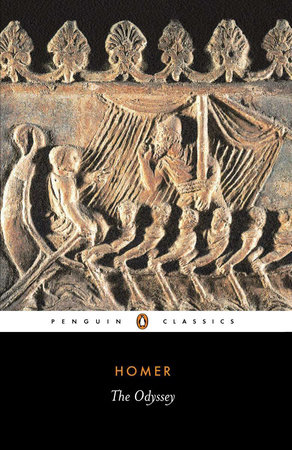
When people think of Homer's The Odyssey, they often envision great battles, heroic deeds, and epic sea voyages. Surprisingly, The SpongeBob SquarePants Movie shares many similarities with this Greek epic, particularly its portrayal of the hero's journey. The film shows the characters facing various obstacles and ultimately fulfilling their quests.

"The Odyssey Book Cover." Penguin Classics, Penguin Random House, 2021.


The Odyssey and The SpongeBob SquarePants Movie center around a central character embarking on a quest. Odysseus fights to return home to Ithaca after the Trojan War, while SpongeBob and Patrick leave Bikini Bottom to retrieve King Neptune's stolen crown from Shell City. Both stories show how these characters confront challenges that test their limits in challenging ways.

While Odysseus encounters well-known creatures that delay his journey, SpongeBob and Patrick encounter similar fates. One of the main comparisons is that Polyphemus traps Odysseus and his men. In the SpongeBob SquarePants movie, they encounter a deep-sea diver, Cyclops, who captures them and tries to dry them up under a heat lamp, similar to how Odysseus and his men were nearly eaten alive by Polyphemus. The video below further demonstrates how both SpongeBob and Odyssues encounter similar problems.

                    "Cylcops Scene." The SpongeBob SquarePants Movie, directed by Stephen Hillenburg, Nickelodeon Movies, 2004. YouTube, uploaded by Shaun O'Hagan, February 12, 2022, https://www.youtube.com/watch?v=HsKgS5Rh1bs.

Another similarity between the two stories is that Odysseus battles Scylla, a six-headed sea monster, and Charybdis, a deadly whirlpool. At the same time, SpongeBob and Patrick travel through a trench filled with deadly deep-sea creatures. The scene when they travel through the trench mirrors when Odysseus sails through the dark, stormy waters, unaware of what is below them.

"Scylla and Charybdis attacking a Ship.The World Explorer, Uploaded by The World Explorer, 31 Dec. 2015.


In The Odyssey, Odysseus faces characters like Circe and Calypso, who are sent to deceive him and make him question whether he should continue. Meanwhile, SpongeBob and Patrick face the same questions from Dennis, who is out to kill them.


Both storylines contain characters who are meant to help them complete their quests. In The Odyssey, Athena advises and protects Odysseus throughout his journey home. In The SpongeBob Movie, Mindy, the daughter of Neptune, encourages them and gives them the courage to keep going to Shell City. The video below shows the viewer how Mindy gives them confidence similarly to how Athena gives Odysseus advice.

                    "Becoming Men." The SpongeBob SquarePants Movie, directed by Stephen Hillenburg, Nickelodeon Movies, 2004. YouTube, uploaded by Movieclips, February 25, 2012, https://www.youtube.com/watch?v=NpI0s0ky53I


Both adaptations show the main protagonists undergoing personal growth. By the end of The Odyssey, Odysseus has learned patience and humility. He went from a warrior to a knowledgeable leader whom others could lean on. While SpongeBob has a childlike mentality, his journey shows that he can overcome doubt and earn the respect of those around him.

The SpongeBob SquarePants Movie adapts The Odyssey, changing it to reflect modern values like self-discovery, perseverance, and humor. While Odysseus is a noble warrior, SpongeBob is an ordinary character trying to prove his self-worth to others. The movie shows how traditional heroism is outdated and how an ordinary person can also complete the hero's journey. It also shows how comedy and pop culture can entertain an audience while incorporating traditional values. By turning The Odyssey into a lighthearted adventure with Patrick and SpongeBob, Greek mythology becomes more accessible to younger audiences while contributing to the idea that true heroism comes from courage, friendship, and staying true to oneself.


Works Cited

Homer. The Odyssey. Translated by E. V. Rieu, Revised by D. C. H. Rieu, Introduction by Peter Jones, Penguin Classics, 2003.

"Scylla and Charybdis attacking a Ship." The World Explorer, Uploaded by The World Explorer, 31 Dec. 2015.

The SpongeBob SquarePants Movie. Directed by Stephen Hillenburg, with performances by Tom Kenny, Bill Fagerbakke, and Clancy Brown, Paramount Pictures, 2004.


Percy Jackson & the Olympians: The Lightning Thief

        Percy Jackson & the Olympians: The Lightning Thief 2022 Reissued Cover Art by Victor Ngai (1)   " The sea does not like to...